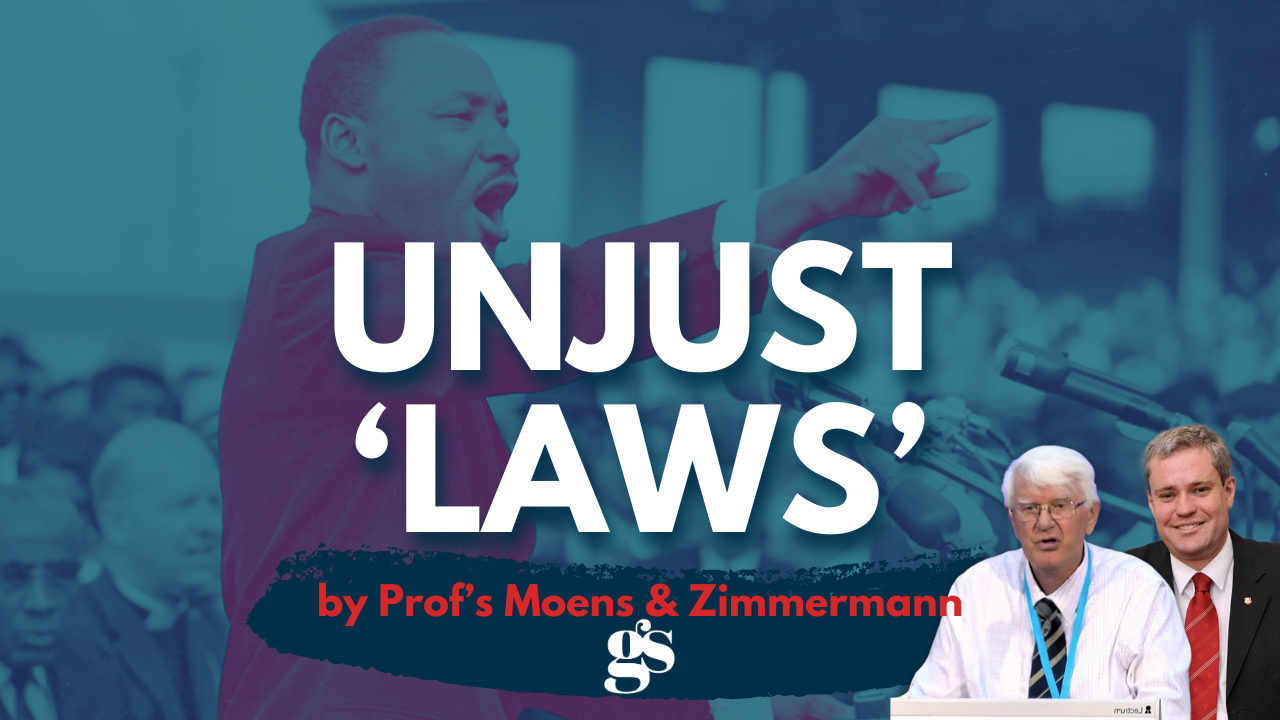
This important essay is co-authored by Professors Gabriël Moens and Augusto Zimmermann.
Gabriël A. Moens AM is an emeritus professor of law at the University of Queensland and served as pro vice-chancellor and dean at Murdoch University.
Augusto Zimmermann is a professor of law and served as associate dean at Murdoch University. He is also a former commissioner with the Law Reform Commission of Western Australia.
Zimmermann & Moens are the authors of The Unlucky Country (Locke Press, 2024).
The legislative proposals to impose an obligation on social media to remove ‘offending’ material is undoubtedly a serious attempt at suppressing free speech in Australia. This is because such legislation compels these media outlets to police all submissions, and any information which is inimical to State-determined policies might very well be removed following requests by overzealous bureaucrats. For example, there is evidence that the e-Safety Office has reportedly asked X (formerly called Twitter) to remove a post critical of a transgender person. Commentators, in this and other publications, have, quite rightly, alerted people to the dangers of these developments for the survival of a free speech culture in Australia.
Of course, suppression of free speech is not limited to Australia, but is a world-wide phenomenon, also notably in New Zealand where recently a tribunal fined a nurse $18,000 and suspended her for fairly criticising vaccine mandates and lockdowns. The tribunal was of the view her basic human rights, including free speech, were not protected in the context of a public health emergency.
These disturbing developments have rejuvenated discussion of the role that civil disobedience can play in safeguarding free speech and stemming the continuing onslaught on people’s basic rights and freedoms.
Henry David Thoreau’s celebrated essay on Civil Disobedience, written in 1848, spearheaded an interest in civil disobedience. In this short and influential text, Thoreau insisted that nobody should allow themselves to be the agents of injustice to another; and that we must never lend support to a wrong which our conscience condemns. This means not simply that we must refuse to obey legal commands which are unjust in themselves but refuse to sustain the government which issues them. Thoreau’s primary consideration is to avoid becoming an aider and abetter of a tyrannical government.
People might recall the story of the English Suffragettes and the indomitable Emmeline Pankhurst who fought for the right to vote. Mahatma Gandhi’s famous Salt March in 1930 overturned a British law of 1882, the Salt Act, which prohibited Indian people from collecting, producing or selling salt. More recent examples of civil disobedience are the Tiananmen Square protests and massacre of April 1989 – an event that has been surgically wiped from Chinese history books. Also in 1989, the people of the United Kingdom protested the poll tax, a single flat-rate tax on every adult, irrespective of personal income. A march in London resulted in the worst riots in the city for over a century with 340 people arrested, and 113 injured. And in France, the Yellow Vest revolution, members of which agitated against the high cost of living and increased fuel prices, dominated the news in 2021.
The question whether there is a right to disobey the law has also been debated in Australia from time to time. For example, in the 1960s and 1970s, a person’s right to disobey the law was debated in the context of Australia’s involvement in the Vietnam war. This debate resulted in the publication of many articles in the Sydney Morning Herald, on the concept of ‘civil disobedience’. Specifically, Professor Ilmar Tammelo, an Estonian who was a Reader at the University of Sydney Law School, published, on Monday, 10 August 1970 an influential article, entitled How should we react to unjust laws? There Tammelo contended that defiance of an allegedly “unjust” law leads to “awkward practical consequences” because “on critically important occasions it may be extremely difficult to ascertain what is just and what is unjust.”
In contrast, other commentators have argued that there is a duty to disobey an unjust law. For example, the Roman orator and legal philosopher Marcus Tullius Cicero noted in his De Legibus, that “justice is not identical with obedience to the written laws.”
By appealing to our religious traditions, the Bible gives some remarkable examples of disobedience to government and its laws. In Exodus, for example, one finds the story of the Egyptian midwives who disobeyed Pharaoh’s command to kill the Hebrew male babies.
“They feared God and did not do what the king of Egypt told them to do.”
– Exodus 1:17
There is also the biblical account of the three Hebrews who refused to obey the Babylonian king, Nebuchadnezzar, when he commanded everyone to bow down and worship his golden image (Daniel 6). And when it was against the law to come into the presence of King Ahasuerus without being invited, Esther disobeyed such a command and risked her own life to save other people, namely the Jews (Esther 4:13-16).
As for the New Testament, when King Herod commanded the wise men to return and tell him where the newborn King of the Jews was to be found, they were warned by an angel to disobey that command. They disobeyed King Herold and ‘departed to their own country by another way’ (Matt 2:8, 12).
Inspired by these biblical narratives, St Ambrose (c 337–397) contended that “a conscientious man must sooner die than obey a command which he knows is wrong”.[1] St Ambrose had to put this principle into practice when he was the Bishop of Milan by forcing the Roman Emperor Theodosius to repent of his vindictive massacre of 7,000 innocent people, in 390. The fact is historically relevant because it indicates that even the highest civil authority was now expected to behave according to the law.[2]

These historical accounts also led St Augustine of Hippo, one of the greatest theologians of all time, to articulate a concept of civil disobedience when stating that unjust laws are no law at all. St Augustine, who lived in the 4th and 5th centuries, believed that any “law that is unjust is not seen to be law at all.” As he also put it: “Justice being taken away, then, what are kingdoms but great robberies? For what are robberies themselves, but little kingdoms?”[1] His basic argument was that ‘a tyrannical government is not really a government at all but a criminal gang masquerading as a government and is therefore not entitled to the obedience that governments (properly so called) can claim.’[2]
Similarly, St Thomas Aquinas, the great Catholic theologian, argued in his Summa Theologica that a law that deviates ‘from the law of nature’ is a perversion of the law and people are not bound to obey an unjust law. According to Aquinas:
“Man is bound to obey secular princes in so far as this is required by the order of justice. If the prince’s authority is not just but usurped, or if he commands what is unjust, his subjects are not bound to obey him, except perhaps accidentally in order to avoid scandal or danger.”[3]
Hence, if the government legally commands what is objectively unjust, people are bound to lawfully disobey the unjust command.[4] In fact, Aquinas goes even to the point of boldly stating that
If the political ruler tyrannically abuses the power, there is no injustice if the community deposes or checks him whom they have raised to the government nor can it be charged with a breach of faith for abandoning a tyrant, even if the people had previously bound themselves to him; because, by not faithfully conducting himself in government as the public office demands, he has brought it on himself if his subjects renounce their bargain with him.[5]
The American Civil Rights Movement in the 1960s was a significant moment in American history. Leading the fight against racial segregation was the legendary Baptist minister, Dr Martin Luther King Jr (1929–1968). When Dr King decided with his colleagues at the Southern Christian Leadership Conference (SCLC) to peacefully march on Good Friday, in 1963, in Birmingham City, a federal judge issued a restraining order on behalf of the city authorities. He ended up being arrested for refusing to comply. In solitary confinement, on stripes of toilet paper, Dr King attempted to explain why he had disobeyed the law. Since he was asking supporters to obey laws that outlawed racial segregation, at first glance it may seem paradoxical for him to consciously break laws. One may ask: “How can you advocate breaking some laws and obeying others?” Dr King stated:
“[The answer to this question] lies in the fact that there are two types of laws: just and unjust. One has not only a legal but a moral responsibility to obey just laws. Conversely, one has a moral responsibility to disobey unjust laws. I would agree with St Augustine that an unjust law is no law at all. Now, what is the difference between the two? A just law is a man-made code that squares with the moral law or the law of God. An unjust law is out of harmony with the moral law. To put it in the terms of St Thomas Aquinas, an unjust law is a human law that is not rooted in eternal and natural law.”[6]
By appealing to St Thomas Aquinas and St Augustine of Hippo, Dr King was convinced that some laws are illegal in a more profound sense: they violate the natural law as they fail to accord some people the same benefits and prerogatives that pertain to them as human beings. In his struggle against segregation, Dr King established the important distinction between the formally legal and the substantially illegal, which then allowed him to conclude that a law may be ‘on the books’ so to speak, but if it violates our natural rights such a law “does not square with the law of God, so for that reason it is unjust and any law that degrades the human personality is an unjust law.” Indeed, a significant part of his strategy to further the civil rights movement in the United States was to challenge unjust laws by measuring them according to higher standards of justice and morality provided by the natural law.
The COVID-19 pandemic, and Australia’s response to it, provides a poignant example of the practical implications of these issues. As is well-known, during the pandemic, protestors deliberately violated the often-draconian emergency regulations, which were cruelly inflicted on Australia. Protestors regarded the COVID-19 emergency laws as incompatible with paramount rights, including the right to dignity, the right to bodily autonomy, the right to free speech, the right to association, and the right to freedom of movement, among others. They questioned whether Australia could still be described as a liberal democracy because the government introduced mandatory vaccine and mask mandates, and prevented “its own citizens from leaving its borders,” and “stranded tens of thousands of its citizens abroad, and imposed strict rules on intrastate travel, prohibited citizens from leaving home without an excuse from an official government quango, and deployed the military to enforce those rules, banned protest, and arrested and fined dissenters.”
These contradictory views cause us to ask the question: is there a right to disobey an allegedly ‘unjust’, but valid, law? If so, what requirements must be met to justify disobedience of a valid law?
- [1] St Augustine of Hippo, The City of God, Bk IV, Pt 4.
- [2] Wayne Grudem, Politics According to the Bible, Zondervan, 2010, 89.
- [3] Thomas Aquinas, Summa Theologica, 72, II, II, Q 104, art 6.
- [4] Ibid.
- [5] Ibid., 89, Bk 1, Ch 6.
- [6] Martin Luther King Jr, Why We Can’t Wait1, 1964] (Signet, 1996), 84–5.
But what exactly is civil disobedience? The term ‘civil disobedience’ is generally applied to refer to the performance of acts prohibited by law. Civil disobedience is the refusal of a person or group of persons to comply with laws enacted by the State which are objected to in themselves or by what they represent or permit. The most elementary form of civil disobedience is personal disobedience to a legal command, where what is asserted is not the invalidity of the law itself but the personal conscientious objection to the fulfillment of its demand. In the broadest sense, civil disobedience encompasses the refusal to perform an act required by law for the purpose of securing change in the actions, policies, or laws of the government.
‘Civil disobedience’ can also be described as a deliberate violation of a valid law, namely a law which is adopted in accordance with the formal requirements of a legal system. The valid law must be incompatible with ‘higher’ principles, for example, moral or religious dictates. The third essential element, which relates to the purpose of the protest, is that an act of civil disobedience must have a beneficial purpose, for example, bringing about desirable social change. In defying the law, a lawbreaker exposes what he or she considers to be intolerable injustices existing in society and proceeds to do something about it.
The purpose requirement, that an act of defiance exposes injustices and yields demonstrable benefits for society, has some important consequences. Specifically, it implies that the act of civil disobedience should be performed publicly. The public nature of an act demonstrates that a law is not breached for reasons of self-interest. The purpose requirement, most of the time, also requires that an act of civil disobedience should be non-violent. This is because the lawbreaker does not aim to destroy society, but to right a societal wrong.
An American commentator, Professor Carl Cohen, makes a distinction between direct and indirect forms of disobedience.[1] Direct disobedience involves a breach of the valid law, which itself is deemed to be incompatible with ‘higher principles’. Indirect disobedience involves the violation of a valid law which is not related to the object of protest.
The infamous case of Plessy v Ferguson[2] provides an example of direct civil disobedience. Plessy, who was of seven-eighths Caucasian and on-eight African blood, purchased a train ticket to travel from New Orleans to Covington. Upon entering a coach reserved for whites, he was ordered to sit in the coach reserved for coloured people. He refused and was arrested. He was subsequently charged with violating a Louisiana statute passed in 1890 which provided for separate but equal facilities for Black people and White people. Thus, Plessy disobeyed a law which was the very law against which the protest was directed.
By contrast, the deliberate violation of a trespass law to object to the government’s embrace of social engineering legislation and policies of the type we have seen recently and increasingly in Australia – same sex marriage, euthanasia, gender dysphoria legislation, preferential treatment, climate change legislation, zero emissions policies, critical legal studies, destruction and desecration of statues and monuments, and so on – is an example of indirect civil disobedience. The distinction between direct and indirect civil disobedience is not academic only because the latter, indirect disobedience, is usually much harder to justify than the former. In other words, the distinction facilitates the process of justification of specific acts of civil disobedience.
An act of civil disobedience may be assessed on its ‘rationality’. In this context, an act of civil disobedience could be judged by its effectiveness – its prospect of success. An ineffective act of defiance is not likely to be rational because it does not result in social change. A commitment to rationality also requires that the higher principles, relied upon as a justification for defiance, are balanced against other, but conflicting, ‘higher’ principles. This balancing requirement ensures that people do not disobey every law with which they disagree and that respect for the rule of law is maintained. This requirement becomes crucial in the light of the fact that acts of disobedience are often based on principles which are accorded absolute validity by their adherents. The desirability of balancing conflicting principles may thus itself be a compelling reason to delay civil disobedience and be considered an act of moral courage.
Those who practice civil disobedience need to assess the consequences of its application. To be effective, arguments must be presented in such terms as others can understand and are able to accept, since some degree of social support is a pre-requisite to virtually every effective act of disobedience. To the extent that the motivation leading to the act must obtain satisfactory levels of public support, arguments leading to disobedience must be justified on socially acceptable terms when they are put forward to sections of the community at large. These arguments need to convince the community, or at least significant sections of the community, that law-breaking is in the public interest.
Additionally, the willingness of a lawbreaker to accept the penalty imposed for breaching a valid law proves their loyalty to the legal system, and expresses, at the same time, their disagreement with a specific law. In this context, Dr King famously declared:
“The individual who disobeys the law whose conscience tells him it is unjust, and who is willing to accept the penalty by staying in jail until that law is altered, is expressing at the moment the very highest respect for the law.”[3]
The requirement that an act of civil disobedience be rational also assumes that the act is proportionate to the alleged injustice that caused a person to disobey the law. According to the principle of proportionality, government decisions should be logically and cogently related to their objectives. In the context of the COVID-19 pandemic, many emergency measures adopted by governments around Australia were unnecessarily authoritarian and, therefore, the protests and possible violations of the law may well have been a proportionate response, especially when these emergency measures were arbitrary and adopted without parliamentary oversight.
[1] Carl Cohen, “Civil Disobedience and the Law”, 21(1) Rutgers Law Review, Autumn 1966, 4-5.
[2] 163 US 537 (1896).
[3] Martin Luther King, Jr. The Essential Writings and Speeches of Martin Luther King Jr. (James M Washington ed., HarperCollins, 1991) 49
The right to civil disobedience is protected by paragraph 2 of Article 19 of the International Covenant on Civil and Political Rights according to which, “Everyone shall have the right to freedom of expression.” This is because the right to freedom of expression also protects actions which communicate a message. Indeed, some actions may come within Article 19 because they are examples of what is known in the relevant literature as ‘symbolic speech’. In instances of symbolic speech, civil disobedience and freedom of expression overlap conceptually.
An American commentator, Professor Harrop A Freeman, confirms that civil disobedience does come within the protection offered by the First Amendment to the United States Constitution, which incorporates the freedom of expression clause.[1] For support, he refers to Musser v Utah where the U.S. Supreme Court stated that:
The “position, that the state may prevent any conduct which induces people to violate the law, or any advocacy of unlawful activity, cannot be squared with the First Amendment.”[2]
Undoubtedly, there are many reasons why civil disobedience takes place. In general, civil disobedience becomes a societal problem when the normal channels of social change do not function properly anymore or whenever serious grievances are not heard. A system does not work adequately when some groups have entrenched power positions in society and use their power to impose their will on politically weaker or vulnerable classes of people. For example, this happens when laws require the distribution of burdens and benefits on the ground of race – a characteristic over which people have no control. This issue was at the very heart of the debate on The Voice. Indeed, when government retreats from the cherished notion of ‘political equality’ under the guise of constitutional reform, civil disobedience may be an effective and expeditious way to voice a person’s dissent.
Arguably, a system loses legitimacy when it no longer functions properly; when privileged groups use their power to impose their arbitrary will on the weaker or more vulnerable classes of people. When this occurs, civil disobedience may arise because of the failure of the ruling classes to meet the demands and expectations of other social groups within the community. In communities held together by a set of common values or beliefs, arguments supporting disobedience must be provided in accordance with the relevant social values or beliefs that are legally undermined.
We conclude that civil disobedience, with a declared intent to challenge a law should be regarded as coming within the scope of political activity in democratic countries. However, repeated acts of civil disobedience are an indication that something is wrong in society. The civil disobedient person keeps a careful eye on the development of society and who, occasionally, deliberately breaks the law to confront society and its perceived or alleged evils. Indeed, civil disobedience is strong medicine which renders a society, which otherwise may become less democratic, more responsive to its problems.
For these reasons, we disagree with the contentious conclusion of Professor Tammelo, who concluded his 1970 article by stating that:
“any form of political chaos produced by a large scale defiance of existing law and order is a precarious way to social and political change.”
Instead, it is appropriate to rely on the writings of John Locke (1634-1704) whose work is always important when it comes to debating the right to lawful resistance against political tyranny. His political writings provided moral justification for the 1688 Glorious Revolution, in Great Britain, and it was later reflected in the American Declaration of Independence, especially in its well-known appeal to ‘inalienable rights’ and the right to resist tyranny. The Declaration of Independence, like the Glorious Revolution, was morally justified as a lawful resistance to free the nation from the tyranny under which it was suffering because of the king of England.
In Locke’s view, governments have no other end but the preservation of our fundamental human rights, they “can never have a right to destroy, enslave, or designedly to impoverish the subjects”.[3] Hence, Locke concluded, resistance to government becomes lawfully valid whenever these fundamental rights of the individual are violated. Locke put it rather succinctly:
“Revolt is the right of the people”.[4]
And Locke also declared:
“Whenever the legislators endeavour to take away and destroy the property of the people [i.e., their natural rights to life, liberty, and property], or to reduce them to slavery under arbitrary power, they put themselves into a state or war with the people, who are thereupon absolved from any further obedience, and are left to the common refuge which God hath provided for all men against force and violence.”[5]
Naturally, we believe that civil disobedience preferably should be non-violent. However, it is equally important to consider that laws resulting in gross violations of basic human rights are themselves a form of violence by the State. Be that as it may, any recourse to civil disobedience should always be balanced against the principle of regular obedience to validly enacted laws. As a strong medicine to render the ruling classes more responsive to morally valid popular grievances, reliance on civil disobedience requires a clear violation of certain moral standards and it should be followed by popular mobilisation based on widespread community support.
Provided the conditions above are met, we contend that civil disobedience has an important role to play in Australian society and in our legal system, and especially in times of practically uncontrolled governmental power. In such circumstances, therefore, it is perfectly reasonable to conclude that people have a lawful right to disobey the law; that is, a right to civil disobedience. We therefore agree with Dr Luther King who, by appealing to the best of our legal-philosophical traditions, correctly reminded us that:
“One has a moral responsibility to disobey unjust laws”.
- [1] Harrop A Freeman, “The Right to Protest and Civil Disobedience”, 41(2) Indiana Law Journal, 1966, 228-254, 242.
- [2] 333 US 95 (1948), 102.
- [3] John Locke, Second Treatise on Civil Government [1690], Chapter XI (Of the Extent of the Legislative Power), sec. 134.
- [4] Glenn S. Sunshine, Slaying Leviathan: Limited Government and Resistance in the Christian Tradition, Canon Press, 2020, 146.
- [5] Locke, Second Treatise, sec. 222.
Gabriël Moens is an Emeritus Professor of Law at the University of Queensland, and during his distinguished career he also taught extensively in the United Kingdom, Germany, Belgium, Italy, Austria, Indonesia, Thailand, Singapore, China, Hong Kong, Japan and the United States. He served as Pro Vice Chancellor and as a Dean at Murdoch University. He also served as Head, Graduate School of Law, The University of Notre Dame Australia.
In 1999 he received the Australian Award for University Teaching in Law and Legal Studies. In 2003 the Prime Minister of Australia awarded him the Australian Centenary Medal for services to education. Prof. Moens is also an extensively published author and serves on the Editorial Board of Locke Press.
WHAT DO YOU THINK? Add your comments below...
This free service - independent, right thinking media - exists because people like you donate a small amount every month.
No government is going to fix the Lying Harlot Media - they're never going to subsidise the news & views people need to hear. And nor should they, because if your media source depends on government subsidies, how could you trust its independence?
The Good Sauce is bringing the best of thinking about important issues, arguments rarely seen elsewhere, into one convenient website with weekly email updates direct to your inbox. But our existence and growth really depends on generous monthly supporters - people like you. Become a Good Sauce supporter today and help us grow to better serve you for the long term.