“What is past is prologue.”
— William Shakespeare
Throughout history, the transfer of global hegemony has rarely come without the sting of war. Empires, like living entities, are born, grow, peak, and inevitably wither, their decline echoing through the corridors of time with tumult and conflict. Today, as the American empire wanes and China ascends, the lessons of the past loom ominously over the present, a grim reminder that transitions of power are often written in blood.
The American Century Unravels
In the aftermath of World War II, the United States emerged as the world’s preeminent power. Its economy, untouched by the destruction that ravaged Europe and Asia, surged to unprecedented heights. The Bretton Woods system, the Marshall Plan, and the establishment of institutions like the World Bank and the IMF cemented America’s central role in the global economic order.
Yet, by the late 20th century, cracks began to show. Deindustrialisation hollowed out the American working class, globalisation shifted manufacturing to lower-cost nations, and financialisation distorted the economy. As historian Alfred McCoy observed:
“Empires fall from within as much as from without.”
The 2008 financial crisis revealed systemic vulnerabilities, and the endless wars in Iraq and Afghanistan drained American resources and morale. Meanwhile, China quietly rose.
The election of Donald Trump in 2016 was both a symptom and a catalyst of American decline. His “America First” rhetoric, trade wars, and disdain for global alliances reflected a nation turning inward, retreating from the very global order it had built. Leaders like Trump often emerge during periods of imperial decline — charismatic, polarising figures who promise national restoration while accelerating fragmentation.
Trump’s second election to the presidency highlights the deep divisions within the United States, as populist nationalism surges and the country’s global reputation frays. Notwithstanding the fireworks of the early months of his second term, any rational reading of history implies these fractures will continue to weaken America’s position as China’s star continues to rise.
The Dragon Ascends
China’s ascent is a story of extraordinary transformation. In 1978, Deng Xiaoping’s reforms ignited decades of explosive growth. The nation embraced state-led capitalism, lifting hundreds of millions out of poverty and constructing the infrastructure of a modern superpower. The Belt and Road Initiative, a colossal network of trade and infrastructure projects, sprawled across continents, binding economies to Beijing’s orbit.
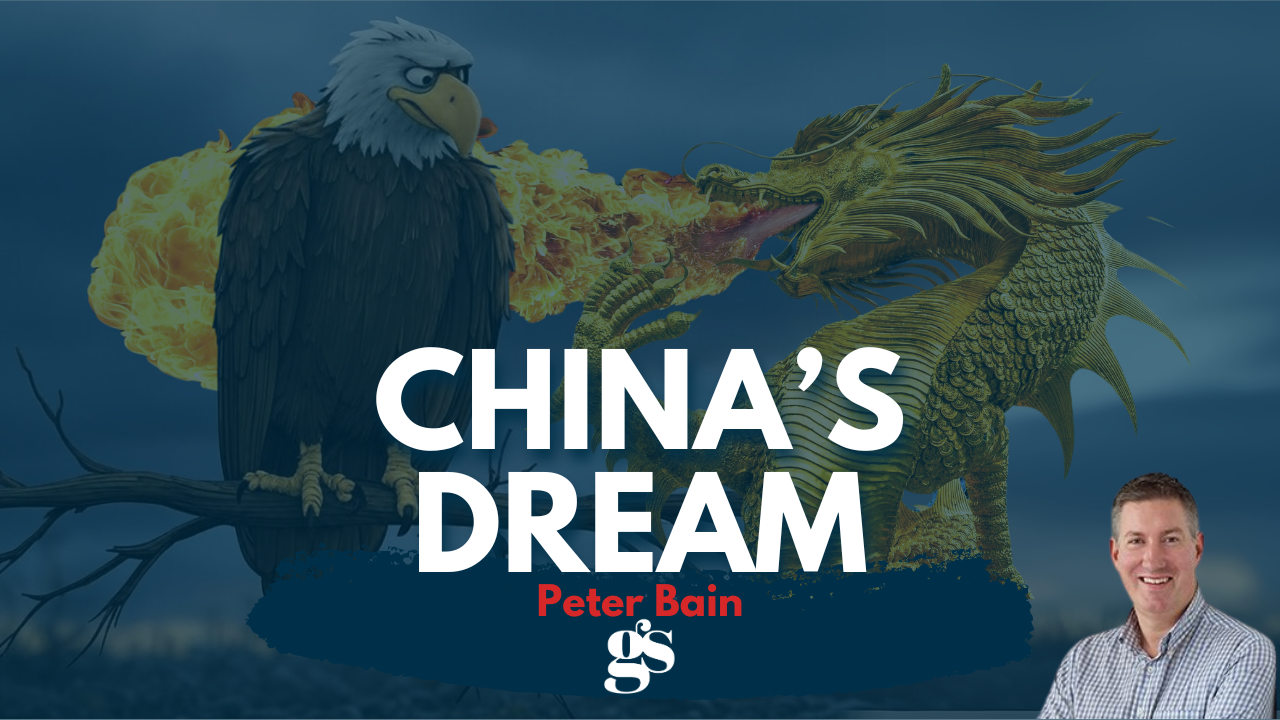
Militarily, China expanded its capabilities with remarkable speed. Its navy, now the world’s largest, prowls the South China Sea. Taiwan, a flashpoint that could ignite global conflict, remains an unresolved legacy of the Chinese Civil War. Xi Jinping’s rhetoric of a “China Dream” reflects an ambition not just for national rejuvenation but for a return to what Beijing views as its rightful place at the apex of world affairs.
China’s moment, it seems, has arrived — and it arrives at a time when American leadership is mired in internal discord. In historical cycles, the rise of a new empire often coincides with the emergence of autocratic, nationalist leaders who promise to restore lost glory. Trump may be America’s harbinger of decline, but Xi Jinping embodies the archetype of the ambitious leader who consolidates power to propel his nation to dominance.

The Historical Cycle of Imperial Transition
History is littered with examples of imperial decline precipitating war. The fall of Athens after the Peloponnesian War, the collapse of Rome under barbarian incursions, the violent twilight of the British Empire — these transitions were not peaceful. The so-called “Thucydides Trap” suggests that when a rising power threatens to displace an established one, war is almost inevitable.
The transition from British to American dominance, though largely peaceful, was an anomaly. The more common pattern is destruction. The Napoleonic Wars reshaped Europe; the two World Wars shattered the old order. Empires, like cornered animals, lash out when faced with mortality.
It is during these turbulent periods that leaders like Trump or Xi — or Napoleon, Caesar, or Hitler — rise to prominence. They promise salvation through strength, restoration through conflict. Churchill himself, though a leader of great resolve, was forged in the crucible of war. Such figures are not anomalies but inevitabilities in times of imperial fracture.
Economic Undercurrents of Conflict
Empires are not just military constructs; they are economic engines. The British Empire was built on trade and industrial supremacy; America’s empire thrived on consumer capitalism and financial dominance. But economic decline breeds instability. Inflation, debt, and wealth inequality erode social cohesion. When empires falter, the temptation to rally public support through militaristic fervour grows strong. China’s rise has disrupted global supply chains, and its mercantilist policies have sparked accusations of unfair competition. The trade wars now beginning may be simply a foretaste in what may be a protracted economic struggle. As in the past, economic rivalry can morph into military confrontation.
Meanwhile, America’s mounting debt, crumbling infrastructure, and the growing chasm between rich and poor have intensified domestic unrest. Historically, economic desperation often precedes war, as struggling populations seek scapegoats and salvation. The echoes of 1930s Germany, or late-stage Rome, are difficult to ignore.
The Gathering Storm
As the American empire fades, its internal fractures widen. Political polarisation, social unrest, and declining global influence sap its strength. Meanwhile, China’s authoritarian model, unburdened by democratic constraints, marches forward.
The world teeters on the edge of another epochal shift, for the first time in two millenia, to an empire unattached to the value on human life at the centre of the Judeo-Christian ethic, with echoes of past transitions reverberating through contemporary geopolitics. Whether the future holds war or peace remains uncertain, but history’s relentless cadence suggests that the pall of war may yet descend.
The rise and fall of empires, from Persia to Britain, tells a cautionary tale: leaders like Trump, for all their bluster, are less the cause of decline than the consequence of it. And on the other side of that decline, leaders like Xi often emerge, ready to seize the moment with ruthless clarity. As nations stumble toward an uncertain future, one truth endures: the fall of empires is rarely quiet, and the rise of new powers often heralds the clash of swords. The question is not whether history will repeat itself — but whether we have learned enough to break the cycle.
Peter Bain is a Melbourne based businessman. He holds an economics degree from Monash University.
WHAT DO YOU THINK? Add your comments below...
This free service - independent, right thinking media - exists because people like you donate a small amount every month.
No government is going to fix the Lying Harlot Media - they're never going to subsidise the news & views people need to hear. And nor should they, because if your media source depends on government subsidies, how could you trust its independence?
The Good Sauce is bringing the best of thinking about important issues, arguments rarely seen elsewhere, into one convenient website with weekly email updates direct to your inbox. But our existence and growth really depends on generous monthly supporters - people like you. Become a Good Sauce supporter today and help us grow to better serve you for the long term.