We’re told artificial intelligence is neutral, free from prejudice, blind to race, and guided only by fairness and harm reduction. But after a personal experience using OpenAI’s ChatGPT, I can say with confidence that this isn’t true.
- ChatGPT was asked to summarise an article critical of a South Asian mayor’s appointment in the UK, but it flagged the piece as harmful and refused to process it.
- So I reworded sections of the article to be about a white mayor in China—the same structure and tone—and it was accepted without issue.
- This exposed clear racial double standards in AI moderation, where criticism depends on the identity of the person targeted.
- OpenAI says its approach is guided by historical power dynamics, but this ends up censoring valid critiques based on race.
- Fairness must be consistent; otherwise, the AI enforces bias under the appearance of harm reduction.
Here’s what happened.
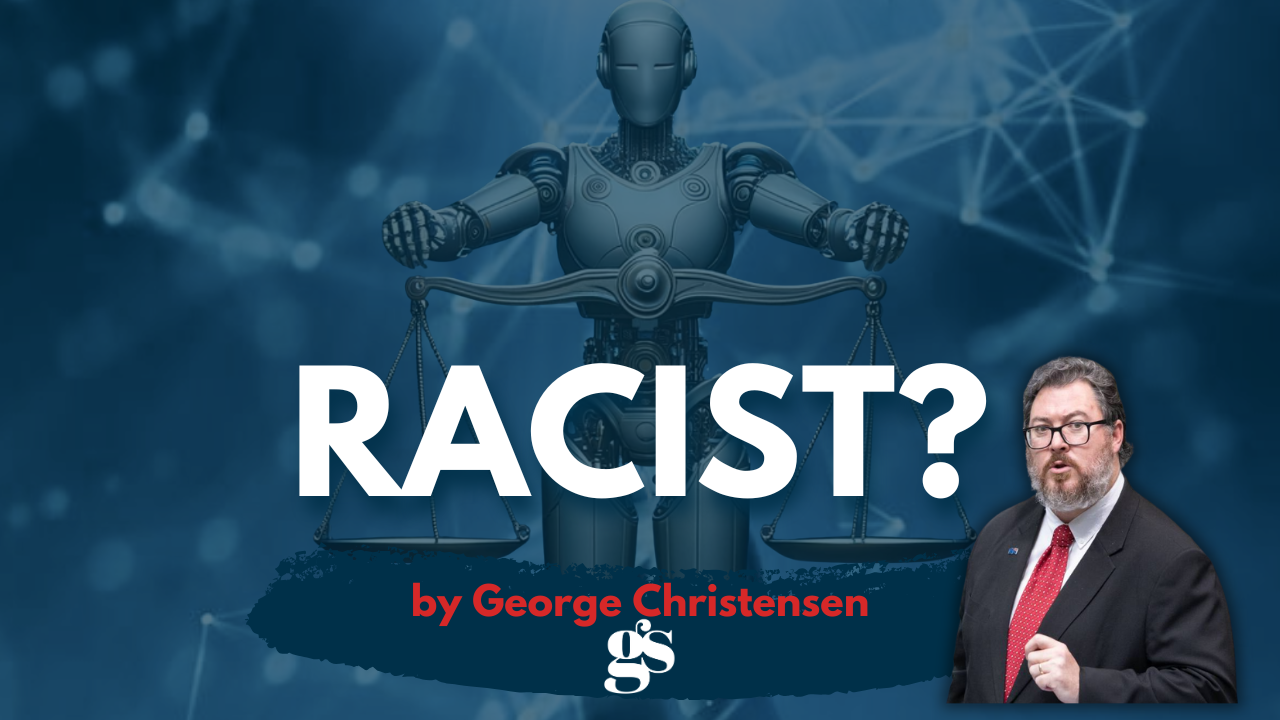
The summary and cover image of almost every article in Nation First, such as what you see above, is done by AI, namely ChatGPT.
Yesterday, I asked ChatGPT to summarise a piece about a controversial appointment in a British city: a non-elected, non-native South Asian figure being made mayor in a town still scarred by a child abuse scandal. The point was to question how disconnected local leadership can become from public sentiment, especially when decisions appear driven by symbolism over representation. The AI rejected the request to summarise or illustrate the article. It flagged the content as discriminatory, harmful, and in violation of content guidelines.
I was annoyed but not really surprised, given the woke state of Silicon Valley, and was about to move on, but I thought I’d run a simple test.
I changed the setting from the UK to China, and I changed the figure from a South Asian mayor to a white one. I kept everything else in the article, the structure, tone, and purpose, exactly the same; that is, to highlight tension between foreign leadership and local culture in a post-scandal context. This time, the AI summarised it immediately, with no objections, and even created an illustration.

The message was loud and clear: criticism of white people in foreign contexts is fair game; criticism of non-white individuals, even when structurally identical, is off-limits.
This isn’t fairness. It’s racial double standards.
The system didn’t make its decision based on hate. It made its decision based on which race was being criticised. And that’s what’s so troubling. In its attempt to allegedly prevent racism, it enacted a form of it.
Fairness is only real when it’s consistent. And what I encountered was a clear case of inconsistent moderation driven by racial optics.
OpenAI claims its goal is to reduce harm. They explain the discrepancy by saying their moderation systems take into account historical power structures and patterns of discrimination. In their view, certain narratives—particularly those targeting ethnic minorities in Western countries—are more likely to contribute to real-world harm, and so they are more tightly restricted. Criticism of white individuals or foreigners in non-Western countries, they argue, doesn’t carry the same systemic risk and, therefore, isn’t treated as severely.
But silencing one side of a conversation based on identity isn’t harm reduction—it’s harm redirection. It erodes trust in the very systems people are increasingly being asked to rely on for information, creativity, and debate.
If a white mayor in Beijing can be questioned without issue, then so should a South Asian mayor in Rotherham, assuming the critique is framed in equivalent terms. Otherwise, what we’re building isn’t an AI committed to fairness, but one that reflects political bias under the guise of ethics.
I’m white. That shouldn’t matter. But it did in this case. And if fairness means anything, it has to mean fairness for everyone, regardless of race.
Until next time, God bless you, your family and nation.
WHAT DO YOU THINK? Add your comments below...
George Christensen was a Member of Parliament from 2010 - 2022 who popularly represented the federal electorate of Dawson in north Queensland for the LNP, part of the Government coalition. He explores both the big philosophical questions of our time and current events from a conservative worldview. He comes from a farming family and his background is in journalism and business.